Learning to live with your inheritances—musical and otherwise
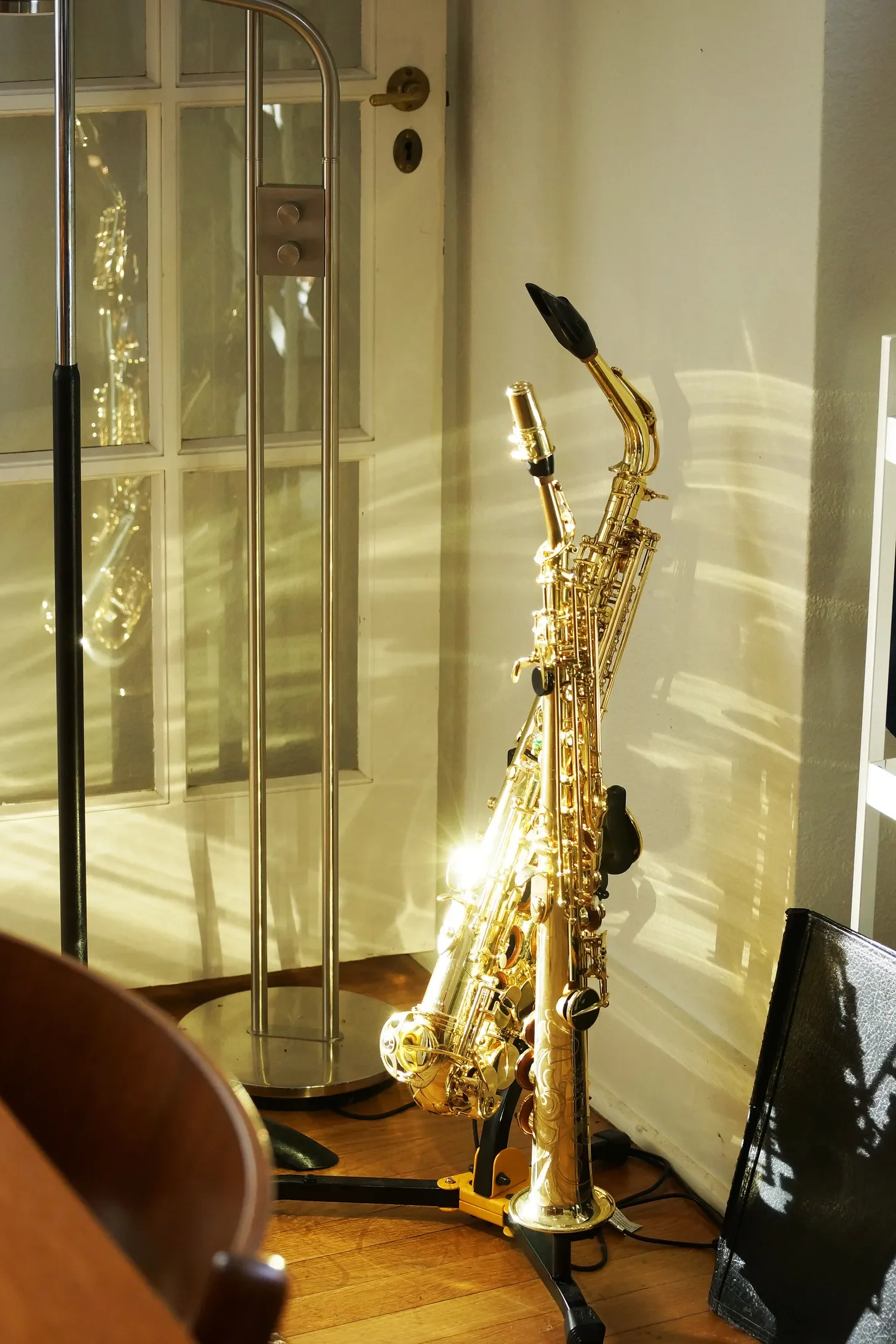
Though I have been writing music for a few years, I’ve put off composing a solo work for the instrument I know best—the saxophone—which I’ve played for more than two decades.
Why?
I’m scared.
I have and have heard too many conflicting and strongly held feelings and ideas about what a “good” piece of saxophone music is to be able to go into writing one with the same relative naivete I do when composing for instruments not my own. My expectations are high, and I imagine those of other potential performers probably are, too (especially of a piece for saxophone coming from a saxophonist!).
To boot, my inherent style rests somewhere in the dip between two musical poles that seem to be popular: music that is complex/abstractly high-concept (in a way that’s often a substitute for something enjoyable to experience…) or, as my good friend likes to put it, Flash and Trash—ear candy that is the expressive equivalent of empty calories (subjective, yes, but that’s the business).
In the end, I’m concerned about acceptance, of putting a piece of myself out there and being welcomed by a community I am a part of but often feel in tension with.
This summer, a fellow (and much more accomplished) saxophonist, Dr. Jessica Dodge-Overstreet, shared some kind things about my piece Morning Comes Always, which the students of her saxophone studio at UW-Stevens Point had performed earlier in the year. Amidst her compliments, she off-handedly wished I had written something for solo saxophone and that, if it existed, she’d love to perform it.
Though the comment was innocuous, I felt my anxiety climb as the chorus of expectations started up in my head. Normally an opportunity to write music and perhaps have it performed elicits excitement. Not for me and not this time.
But something about having Jessica’s vote of confidence in music I had already written opened the door a tiny crack for me. I didn’t take the invitation right then, but the door would stay cracked long enough for me to work up the courage to hop on the phone a couple months later to discuss with Jessica what such a piece of music could look like.
We chatted about what horn she would like to play on (soprano) and what she found most enjoyable and unique about the soprano saxophone (the extremes of the instrument - the powerful and direct low end and the flute-like upper and altissimo registers). I came to the conversation with a couple of musical ideas and sketches I thought might resonate with her: first, some (intentionally) meandering unaccompanied music inspired by our shared appreciation of wandering in the outdoors and wide-open spaces; second, an eight-bar lullaby that had come from a composing exercise where I imagined what different loved ones might sing to me.
Jessica found both ideas of interest, but as a mother to a young son, the story behind the lullaby was more captivating. An excerpt from the program notes tells the tale:
The main “tune” emerged from an unusual-for-me composing exercise in which participants are directed to imagine what different people in your life might sing or hum or whistle to you. During one round of the exercise, I closed my eyes and imagined what my dad might sing to me. A simple and tender melody emerged, surprising me as those aren’t words or feelings I immediately associate with him. The tune was accompanied by an image of him holding me as a newborn, rocking me, looking down protectively. The rest of the piece grew from this kernel.
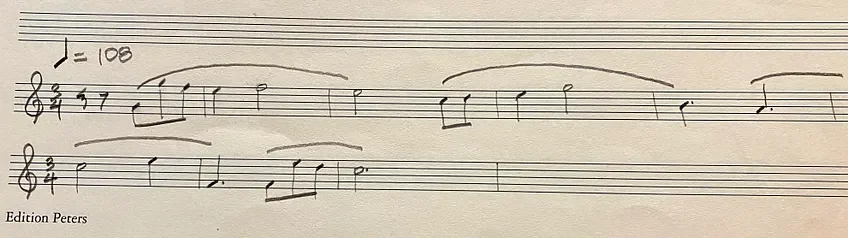
The tune is almost embarrassingly simple and earnest. I had let it sit in my music “compost pile” for years because I didn’t know what to do with its simple power, which gave me chills and made me blush in embarrassment at the same time. Neither of us knew what would grow from this seed, but it seemed like it might go somewhere special.
Throughout the summer, I worked at the piece in fits and starts. As it grew and grew, it largely retained its earnest and naive character; my fears of not meeting expectations to compose something impressive and “mature” and serious and dazzling clamored to the fore.
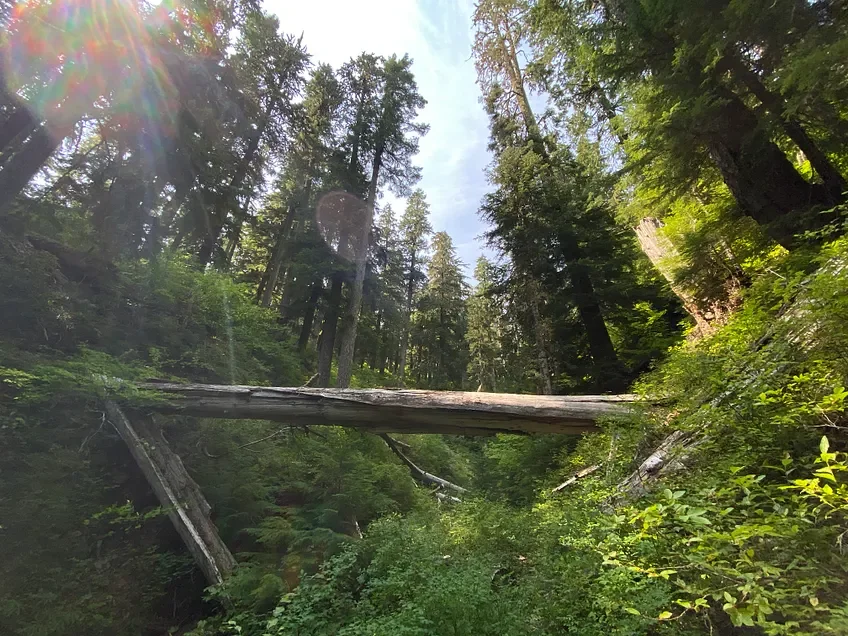
Breakthroughs on the music came sporadically, but almost always seemed to happen while I was backpacking. For example, the tune that helped the piece turn the corner from a dark place it had gotten stuck arrived suddenly as I entered a hidden and grand ancient arboreal proscenium.
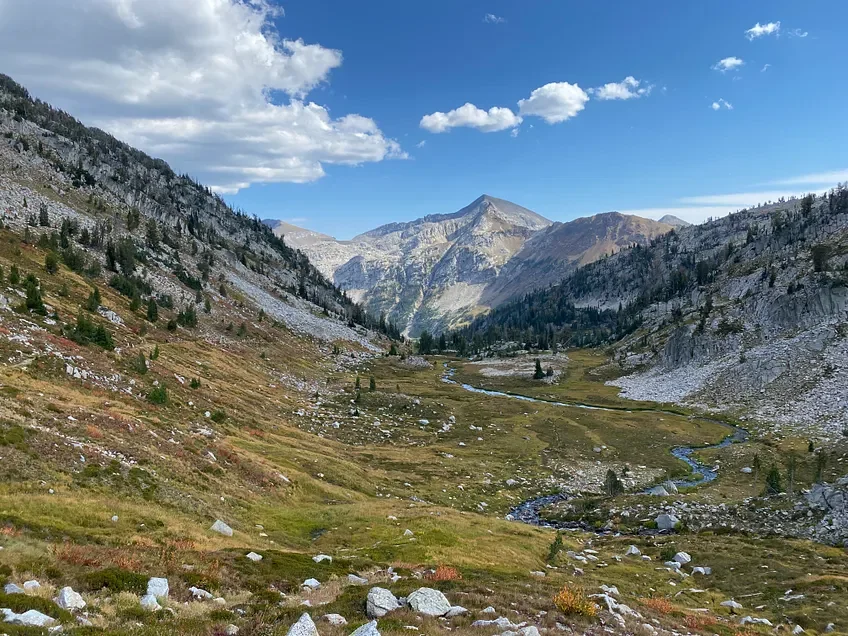
And the name for the piece would fall from the sky as I made my way up a glacial valley.
Writing this music became a way to learn to better live with some of my musical and extra-musical anxieties—both in the writing of it and in realizing it was going to be an earnestly heart-forward piece whose content and arc itself seek to understand and soothe such anxieties.
Given the origin of the opening lullaby, I gave the piece the working title of “The Apple and its Tree”, a fortuitous naming as the whole roadmap of the piece would later be unfurled from this title’s analogy.
Full program notes:
An apple doesn’t fall far from the tree, but it does fall. And when it falls, it bruises, a necessary, if unpleasant, separation that’s part of becoming something else, something greater—maybe a tree, perhaps a home, maybe cider or sustenance.
We all emerge from childhood with figurative scars, pinches, puckers, and distortions in our character and personality—not necessarily due to something egregious happening, but because getting our needs met when we nor our caretakers (nor family nor friends) fully understand them has been and will always be an imperfectly met challenge. It’s a lifetime’s work to understand our inheritance of peculiarities, to navigate them (and help others navigate ours), and to make the most of the hand we’re dealt.
This music is addressed to the child in each of us and hopefully, with its aspect of earnest tenderness, deeply soothes the parts of us that were in some way not able to fully blossom—because we were not enough or we were too much or not the right shape or had to take on too much too soon.
The main “tune” emerged from an unusual-for-me composing exercise in which participants are directed to imagine what different people in your life might sing or hum or whistle to you. During one round of the exercise, I closed my eyes and imagined what my dad might sing to me. A simple and tender melody emerged, surprising me as those aren’t words or feelings I immediately associate with him. The tune was accompanied by an image of him holding me as a newborn, rocking me, looking down protectively. The rest of the piece grew from this kernel.
Allowing myself to be predominantly gentle, tender, and playful in my music is my step toward knowing and honoring yet-unfurled buds and blossoms. If there’s one listener who at piece’s end feels even a bit closer to that for themselves, that’s enough for me.

Earlier this month, I hit send on the final draft of the piece, whose official title is blossom, behold, bruise, become. Early next year, Dr. Jessica Dodge-Overstreet will give the premiere at the North American Saxophone Alliance national conference in Columbus, OH. I’m excited and anxious (but slightly more excited than anxious…!) to see Jessica bring her artistry to the music and very thankful for her trust in this collaboration.